Deepfake vs Face Swap — What Is the Difference?
“Deepfake” and “face swap” get used interchangeably in headlines, comment threads, and app store reviews. They are not the same thing. The confusion matters because it leads people to treat a harmless photo filter the same as a tool built to deceive — or, worse, to assume every face swap app is a deepfake factory.
This guide explains what each term actually means, how the technology differs, where the ethical lines sit, and why the distinction matters for anyone who uses — or worries about — either one.
What Is a Deepfake?
A deepfake is a piece of synthetic media — almost always video — where a person appears to say or do something they never actually said or did. The defining feature is not the face replacement itself but the intent to deceive: a deepfake is designed to pass as real footage of a real person.
The term comes from a Reddit username that surfaced in 2017, and it stuck because it captured the threat: “deep” (deep learning) + “fake.” Since then it has become shorthand for any AI-generated video meant to mislead — political speeches that never happened, fabricated celebrity endorsements, non-consensual intimate imagery.
Deepfakes are typically built using Generative Adversarial Networks (GANs) or diffusion models trained on hours of video of a specific person. One network generates frames, a second network tries to detect them as fake, and the two train against each other until the output is convincing enough to fool the discriminator. The training process can take days and requires significant compute.
The result is a model that can generate new, realistic-looking video of a specific person — not just paste a face onto an existing clip, but synthesize expressions, mouth movements, and head turns that never occurred.
What Is a Face Swap?
A face swap replaces one face with another in a photo or video. That is the entire scope. You pick a source face, pick a target image or video, and the app maps the source identity onto the target — same pose, same lighting, same background. The output is obviously a swap, and nobody is pretending otherwise.
The technology behind face swaps is a much lighter pipeline than deepfake generation. As covered in our guide to how AI face swap works, the process follows four steps:
- Face detection — find the faces in both the source and target
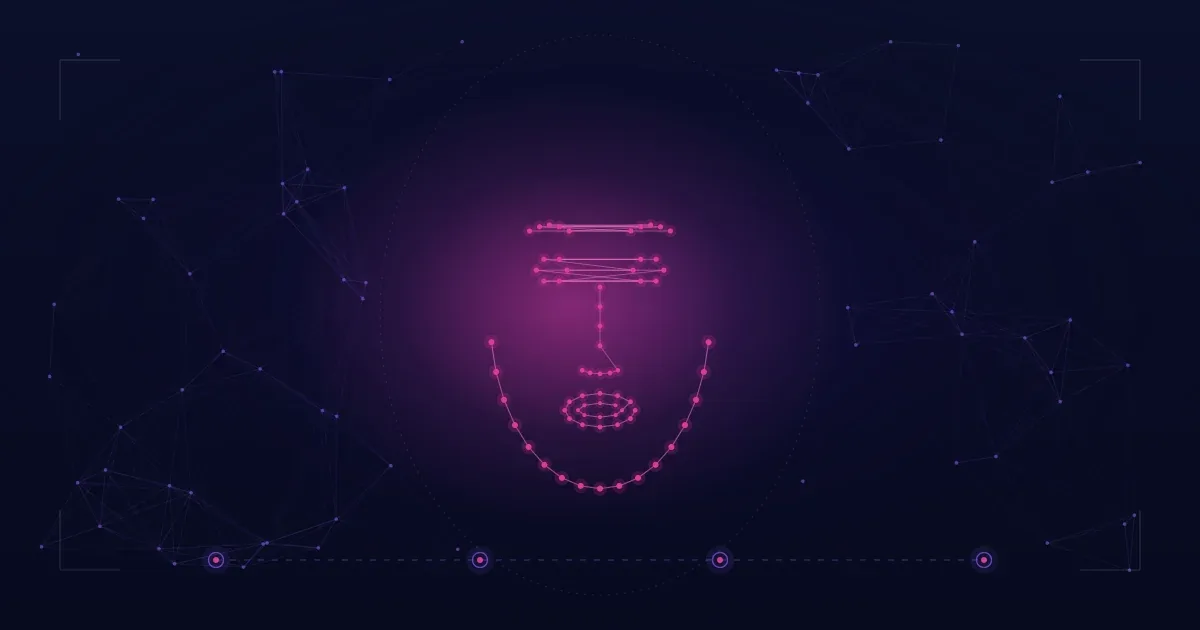
- Landmark mapping — plot the geometry of each face (eyes, nose, mouth, jawline)
- Encoder/decoder swap — encode the source identity and decode it onto the target’s pose and lighting
- Blending — match skin tone, lighting, and edges so the swap sits naturally in the frame
No adversarial training. No hours of compute on a single person’s likeness. The model is general-purpose — it works on any face, not one it was specifically trained to imitate. Most mobile face swap apps return a result in seconds, running the pipeline on cloud GPUs.
Deepfake vs Face Swap: The Key Differences
The two share a surface-level similarity — both involve AI and faces — but diverge on nearly everything else.
| Deepfake | Face swap | |
|---|---|---|
| Goal | Generate convincing fake footage of a specific person | Replace one face with another in an existing photo or video |
| Intent | Typically deceptive — designed to look real | Typically creative or playful — obviously a swap |
| Core tech | GANs or diffusion models trained on a specific person | Face detection + landmark mapping + encoder/decoder + blending |
| Training | Hours/days on target person’s video data | No per-person training — general-purpose model |
| Compute | GPU cluster or high-end desktop | Runs on a phone in seconds |
| Output | Fully synthetic video (new speech, expressions) | Existing media with one face replaced |
| Detection | Harder to detect when well-made | Easier to spot (blending artifacts, lighting mismatch) |
The simplest test: if someone could mistake the output for real, unedited footage of the person shown, it is in deepfake territory. If the output is clearly a swap — your face on a movie scene, a friend’s face on a meme template — it is a face swap.
Is Face Swap a Deepfake?
No. A face swap is not a deepfake, even though both use AI to modify faces. The technology is different, the intent is different, and the output is different.
That said, the line can blur in one specific scenario: when someone uses face swap technology to create content designed to deceive. If you swap your face onto a politician in a news clip and share it as real footage, you have used face swap tools to create something that functions like a deepfake, even if the underlying technology is simpler.
The technology does not determine the ethics — the use does. A kitchen knife is a tool; context determines whether it is cooking or something else. Face swap technology is the same way.
Legal and Ethical Differences
The legal landscape treats deepfakes and face swaps very differently, and for good reason.
Deepfakes are increasingly regulated. As of 2026, multiple US states have laws specifically targeting non-consensual deepfake pornography and deepfake election interference. The EU AI Act classifies deepfakes as a transparency risk, requiring clear labeling. China’s deep synthesis regulations require watermarking and consent. The legal trend line is unmistakable: deepfakes are being treated as a distinct category of harm.
Face swaps fall under the same general rules as any photo editing tool. Swapping your own face onto a movie scene for a laugh is no different legally than using Photoshop to put your head on a bodybuilder. The same laws that protect against defamation, harassment, and non-consensual intimate imagery apply — but face swap technology itself is not regulated as a category.
The ethical framework is simpler than the legal one:
- Consent: only swap faces you have the right to use — your own, or someone who has clearly agreed
- Context: do not create content designed to mislead, defame, or harass
- Distribution: a swap shared in a group chat as a joke is different from one posted publicly to deceive
Most face swap use — swapping with friends, trying celebrity looks, creating meme content — sits well within harmless creative expression. The problems start when the output is used to deceive or harm, which is a user behavior problem, not a technology problem.
When Face Swap Is Harmless Fun
The overwhelming majority of face swap usage is exactly what it looks like: people having fun. Common use cases that raise zero ethical concerns:
- Swapping with friends for group chat laughs
- Trying a celebrity look to see how you would look with a different hairstyle or in a movie scene
- Creating meme content where the swap is the joke, not a deception
- Testing outfits or styles by swapping onto reference photos
- Making gifts — birthday cards, event invitations with swapped faces
These are the same things people have done with Photoshop for decades. AI just makes it faster and accessible to people who do not know how to use image editing software.
When Face Swap Becomes Problematic
Face swap crosses the line when it is used to:
- Create non-consensual intimate content — this is illegal in most jurisdictions regardless of the tool used
- Impersonate someone in a way designed to deceive (fake profiles, fabricated evidence)
- Harass or bully by putting someone’s face in humiliating contexts without consent
- Commit fraud — swapping faces to bypass identity verification
None of these are unique to face swap technology. They are misuses that apply to any image or video editing tool. The difference is speed and accessibility — face swap apps make it easy enough that the barrier to misuse is lower than it was with Photoshop.
Responsible apps mitigate this in several ways: content moderation, clear terms that prohibit non-consensual and deceptive use, and — on the privacy side — not building an identity profile around the people you swap, so there is no face-linked database of users to misuse or leak.
How Face Swap AI Keeps It Safe
Face Swap AI is built so that nothing about a swap is tied to who you are, which makes misuse structurally harder:
- Anonymous device login. No email, no phone number, no social login. The app uses a random device identifier that is not tied to your real identity, so there is no profile connecting the faces you swap to a person.
- No identity profile. Because there is no account, the app is not assembling a face-linked record of you across sessions. The swap runs on cloud GPUs like most realistic-quality apps, but there is no signup that ties those swaps to your name or email.
- No sharing platform. Face Swap AI is a tool, not a social network. There is no feed, no public gallery, no way for your swaps to go viral inside the app. What you make is yours to share — or not — on your own terms.
- No training on your data. Your photos are not used to train models. The swap model is pre-trained and runs as-is.
This is a meaningful structural difference from apps that require an account and store your face in a database alongside millions of other identified users. Skipping the account entirely is not just a privacy feature — it is a design decision that limits the blast radius of any potential misuse.
For more on the privacy architecture, see the privacy considerations section in our technical guide.
FAQ
Is face swap a deepfake?
No. A face swap replaces one face with another in an existing photo or video. A deepfake generates entirely synthetic video of a person doing or saying things they never did. The technology, intent, and output are different. Face swap uses face detection and blending; deepfakes use adversarial networks trained on a specific person.
Are face swap apps safe to use?
Most face swap apps are safe for casual use. The key questions are: does the app make you create an account, or can you swap anonymously? Does it require personal information to sign up? Does its privacy policy clearly state what happens to your photos? Apps like Face Swap AI that use an anonymous device key with no account are structurally safer than apps that tie your face to a profile, because there is no identified record of you to retain or leak.
Can deepfakes be detected?
Yes, and detection is improving. Forensic tools analyze artifacts like unnatural blinking patterns, inconsistent lighting, audio-visual mismatches, and compression anomalies. Social media platforms are deploying automated deepfake detection. However, the best deepfakes are increasingly hard to spot with the naked eye, which is why platform-level detection matters more than individual vigilance.
Is it illegal to face swap someone?
Face swapping itself is not illegal in most jurisdictions. However, using a face swap to create non-consensual intimate imagery, commit fraud, harass someone, or impersonate a person for deceptive purposes can violate existing laws. The legal risk is in how the output is used, not in the act of swapping itself. Always get consent before swapping someone else’s face.
What is the difference between deepfake and face swap technology?
Deepfakes typically use Generative Adversarial Networks (GANs) or diffusion models trained for hours on a specific person’s video footage. Face swaps use a general-purpose pipeline — face detection, landmark mapping, encoder/decoder identity transfer, and blending — that works on any face without per-person training. Deepfakes can synthesize entirely new expressions and speech; face swaps only transfer identity onto existing footage.
The Bottom Line
Deepfakes and face swaps share a surface-level connection — AI plus faces — but the technology, intent, and risk profile are fundamentally different. Deepfakes are built to deceive. Face swaps are built to entertain. The distinction matters because conflating them leads to either unnecessary fear of harmless tools or dangerous underestimation of real threats.
If you are looking for a face swap app that takes the safety question seriously, Face Swap AI asks for no account and no personal information, and gives you the swap without a watermark or a subscription. Three free swaps to start — try it and judge for yourself.